Proposed operating name

Fluxology 3D Lab

Target 2029-2030 · Internal capability may precede public launch

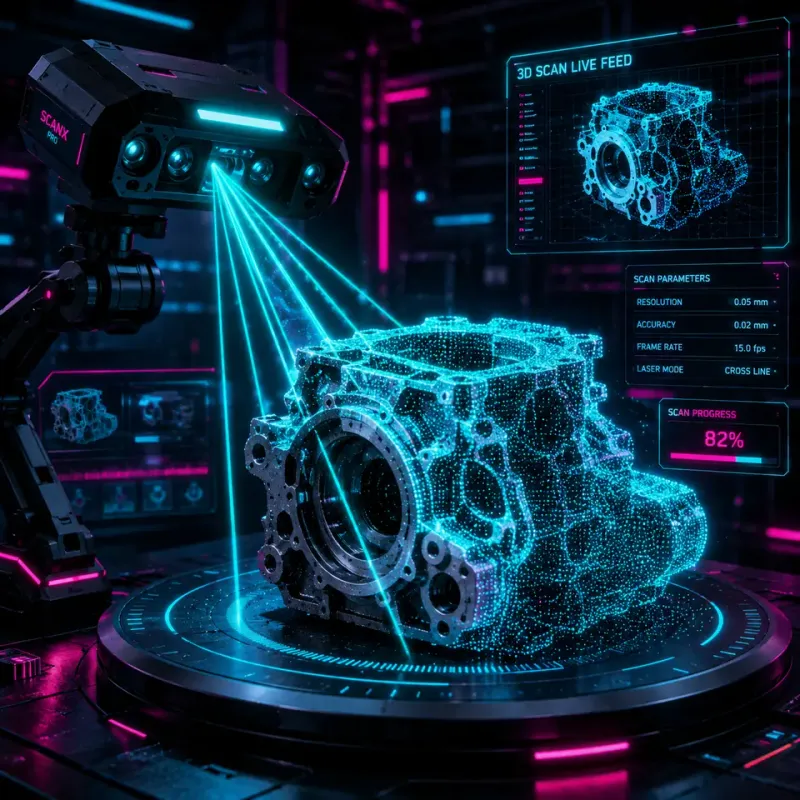
A compact scan-to-solution capability paired with Fabrication & Welding - not a speculative print farm. Its primary value is reducing measurement error, creating jigs, restoring unavailable parts and building reusable digital records; selective external work follows proven demand.

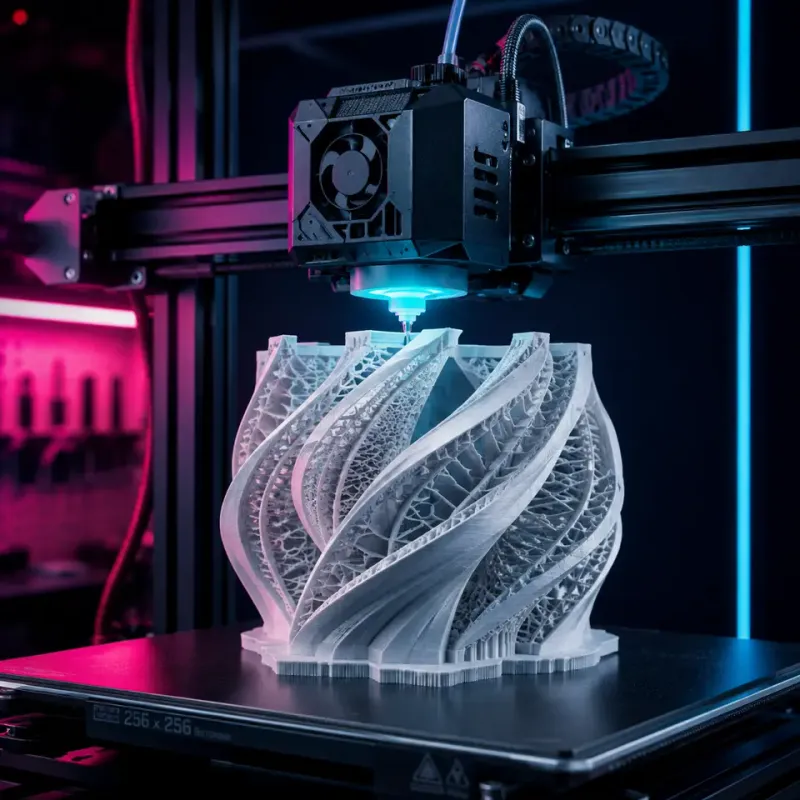
Large-format 3D printer operating in a dark digital fabrication laboratory
One reliable process at a time

Strategic position

A force multiplier for local repair and fabrication

The 3D Lab earns modest direct revenue, but its larger value is making Fabrication & Welding more capable. It can capture irregular geometry, produce jigs and fit checks, restore unavailable components and preserve customer-approved models for repeat work.

Commodity online printing is not the target. A decorative print competes globally; a replacement cover that fits a local machine, a weld fixture derived from site measurement or a hybrid repair delivered quickly has a defensible local advantage.

01

Internal utility first

The first printer must save fabrication time or outsourcing cost before the DBA needs separate marketing.

02

Reusable digital assets

Source scans, cleaned geometry, revisions and release files make repeat work faster and more reliable.

03

Local measurement advantage

On-site capture and fabrication judgement differentiate the offer from commodity print services.

04

No print-farm model

A second printer, scanner or resin process is added only when queue, capture or material evidence justifies it.

Portfolio roleFabrication force multiplier
Starting systemOne reliable enclosed FDM printer
Expansion ruleOne validated process at a time

Technical service portfolio

The output may be a model, prototype, print, drawing or hybrid repair

Every project begins by identifying the real physical problem and the consequence of failure.

CapabilityCustomer outcomeCommercial formStrategic value
3D scanningIrregular geometry captured as a digital referenceSetup plus capture timeEnables repair and replacement work
CAD and model cleanupScans, sketches or dimensions become manufacturable geometryHourly or fixed projectCreates reusable digital assets
FDM printingPrototypes, jigs, fixtures, covers and low-volume partsProject minimum plus material and machine occupancyLow capital and fast iteration
Fit-up and reverse modellingMeasurement, scan data and fabrication judgement are combinedProject quoteDifferentiates the welding line
Digital archiveCustomer-approved models and revision history remain reproducibleIncluded or defined retention arrangementSupports repeat orders

Operating method

Scan-to-solution with clear handoffs

The line sells a verified problem-solving process. Visual models, fit-check prototypes and functional end-use parts are explicitly distinguished.

  1. 01

    Define

    Record intended use, loads, environment, failure mode and customer permission.

  2. 02

    Capture

    Use photographs, manual measurements and scanning only where it adds useful geometry.

  3. 03

    Model

    Clean or rebuild geometry, set datums and tolerances, and retain a revision record.

  4. 04

    Prototype

    Produce a low-cost test piece, verify fit and obtain customer approval.

  5. 05

    Release

    Deliver the print, fabrication drawing or hybrid solution with final inspection records.

Equipment ladder

One machine at a time

Used or refurbished equipment is valuable only when mechanical condition, electronics, software licensing, serviceability and parts support can be verified.

01Need proven

Paid work, recurring own-use need or a measured bottleneck.

02Inspectable

Condition, service history, consumables, manuals and support can be checked.

03Price disciplined

All-in used cost remains meaningfully below a supportable new equivalent.

04Payback bounded

Base-case payback fits within 24 months or the asset waits.

PhaseEquipmentPlanning envelopePurchase gate
StarterEnclosed FDM printer, dryer, basic filament, calipers, inserts and finishing tools$1.2k-$1.8kInternal fabrication use plus first paid demand
Scan capabilityUsed or refurbished handheld scanner, targets, turntable and controlled lighting$700-$1.4kFive jobs where scanning would reduce time or enable work
Quality upgradeSurface plate, better metrology, ventilation and material storage$500-$1.2kRepeat tolerance-sensitive work
Optional second processSecond FDM printer or resin system$700-$1.8kQueue delay or recurring material/resolution need

Operating controls

Quality, files, privacy and intellectual property

The digital record can be more valuable than the physical print, so the release process needs explicit ownership and verification.

01

Measurement record

Tool, verification date, datum scheme, tolerance assumptions and relevant conditions are preserved.

02

File versioning

Immutable project IDs link source scans, cleaned meshes, CAD revisions, slicer profiles and release files.

03

Customer IP

Ownership, backup retention and repeat-production permission are stated rather than assumed.

04

Intended-use class

Visual model, fit-check prototype and functional end-use part are labelled distinctly.

05

Material and process

Temperature, UV, chemical exposure, load and failure consequence are checked before suitability claims.

06

Data retention

Access is restricted and deletion or archival periods are defined to avoid indefinite, unmanaged storage.

Evidence before expansion

Validation gates and stop conditions

The commercial risk is less the printer than unpaid cleanup and poorly defined customer expectations.

  1. M1

    Internal utility

    At least five fabrication jobs save measurable time or outsourced cost.

  2. M2

    Paid validation

    Ten external jobs show positive contribution after modelling time.

  3. M3

    Scanning gate

    Five lost or inefficient jobs are specifically attributable to missing scan capability.

  4. M4

    Repeatability

    Three repeat customers and a documented QA and file-release process.

  5. STOP

    Simplify if needed

    If cleanup remains unbillable or external revenue stays below fixed cost for two years, keep the tools internal.