Proposed operating name

Fluxology Greenhouse

Post-property · Base case begins with the 2032 growing season

A small, modular protected-growing system built for household food security, season extension, preservation and propagation. Corporate sales begin only when the homestead exists, recurring surplus remains after household commitments, and simple local channels fit the one-person workload.
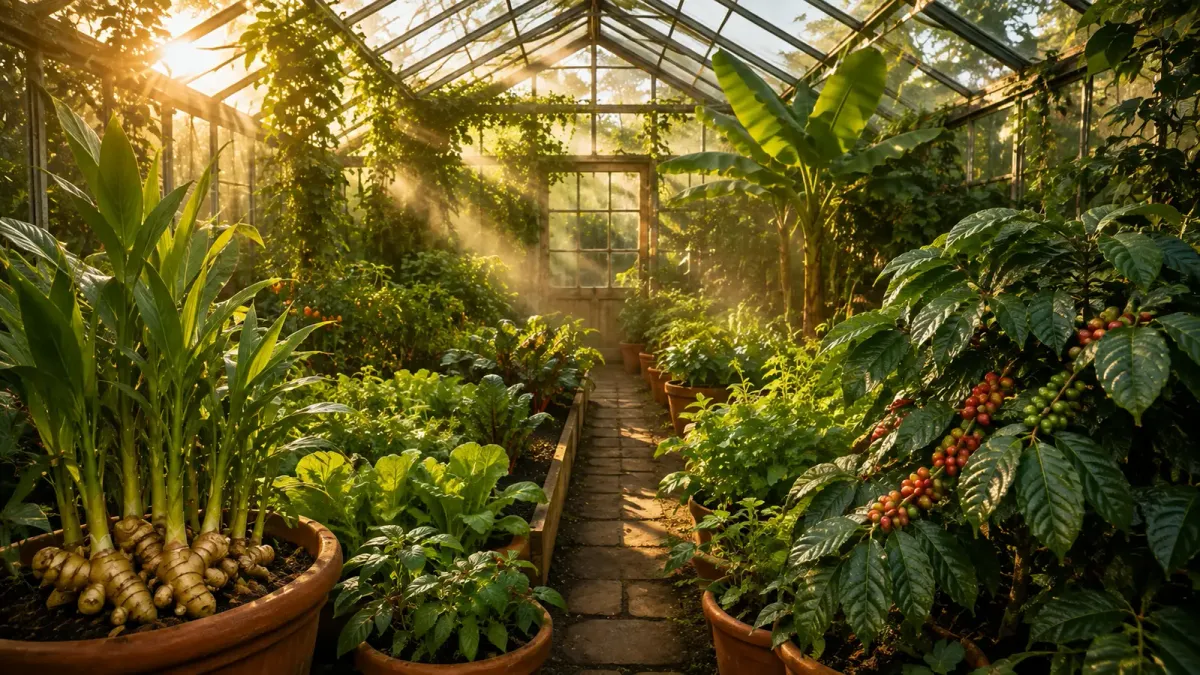
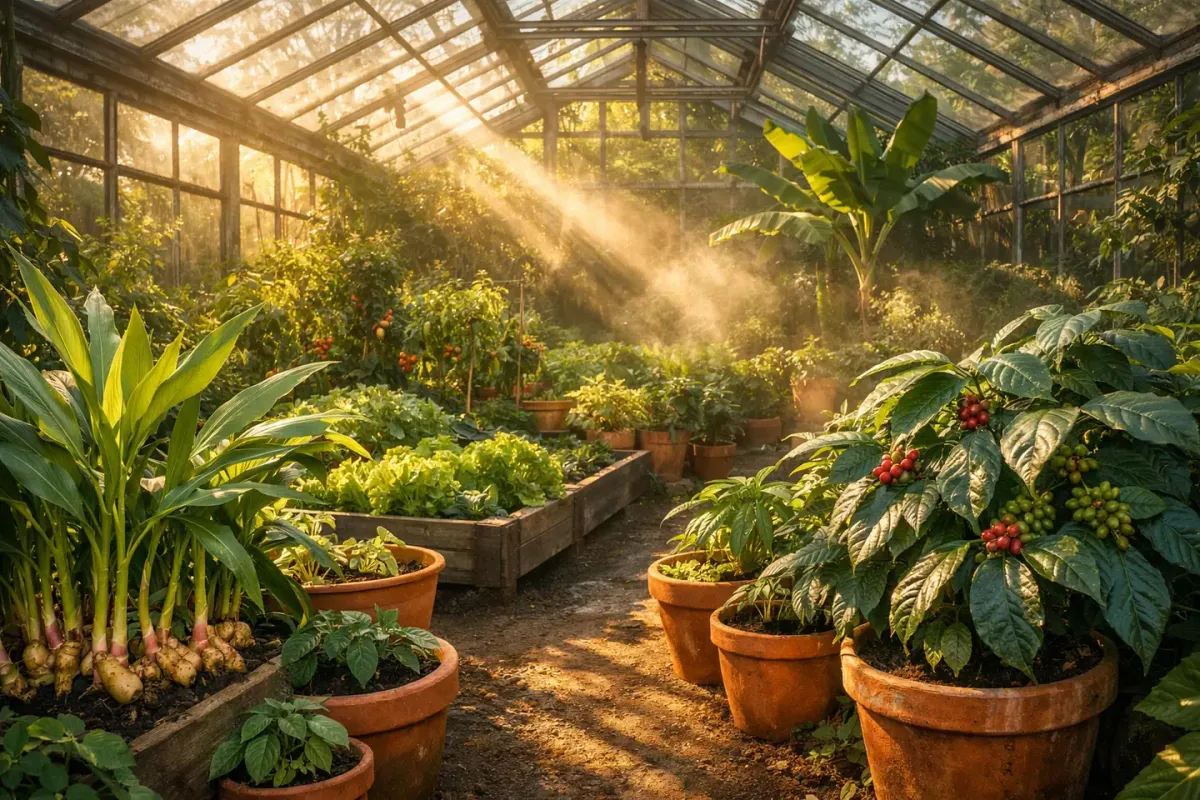
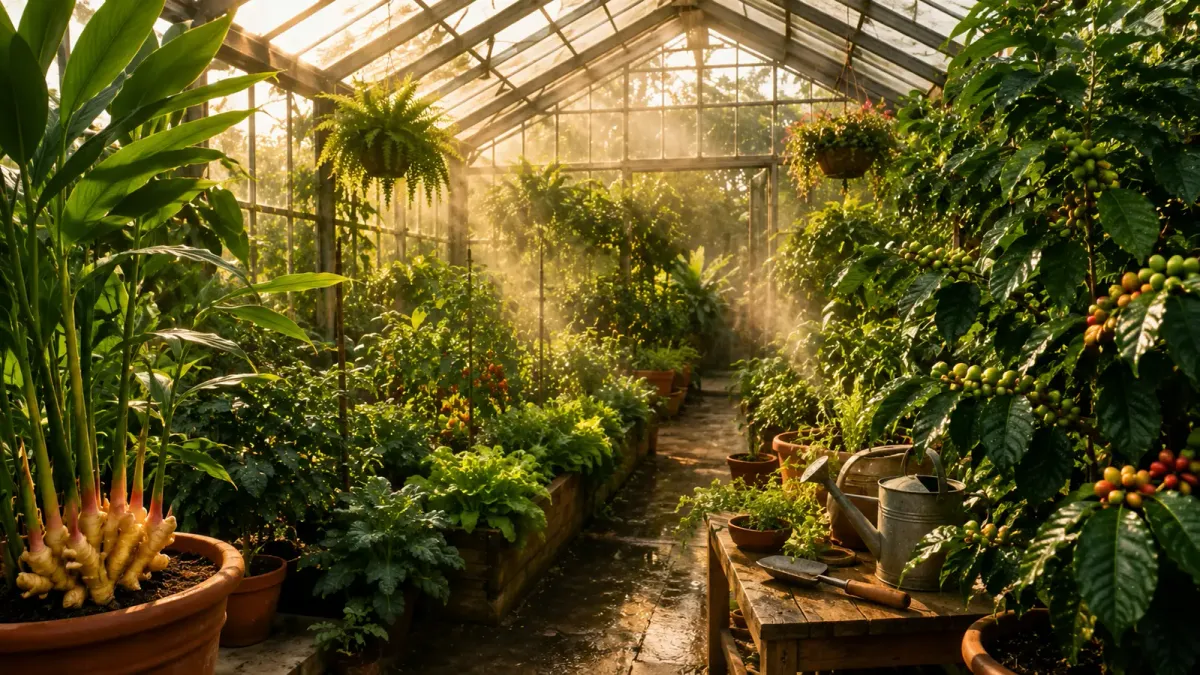
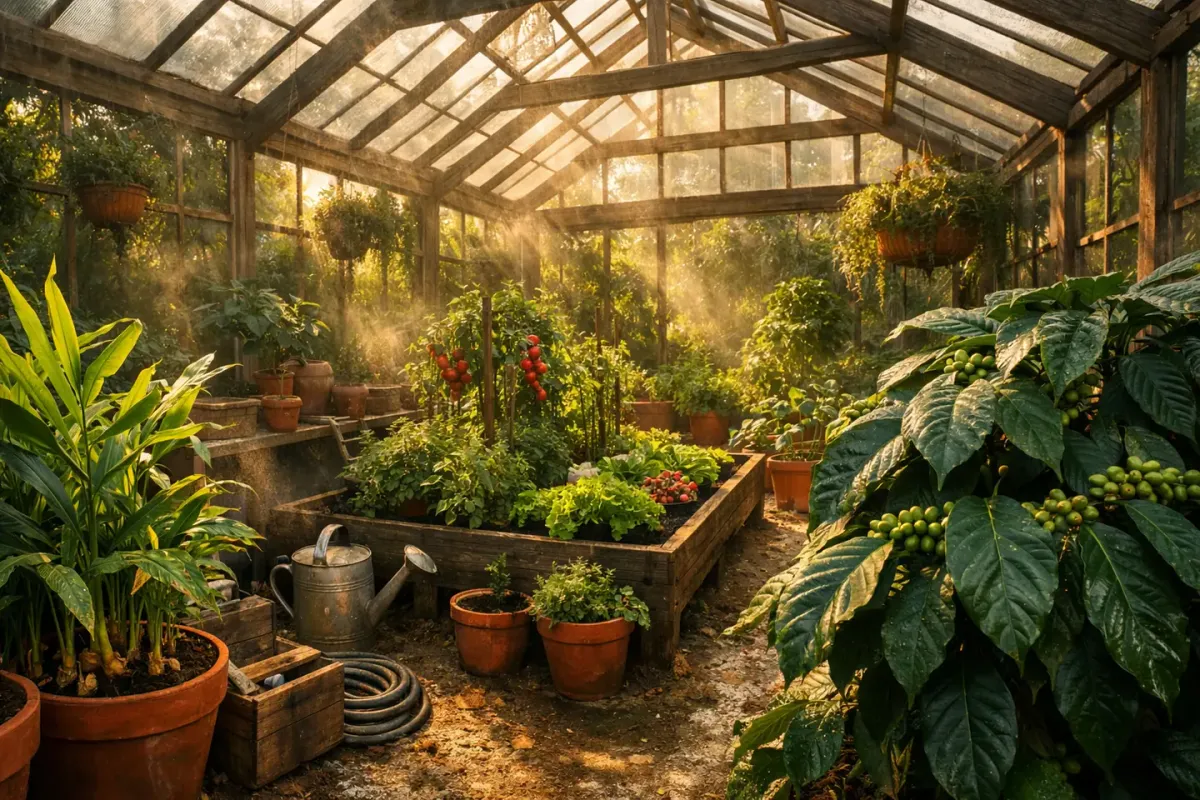
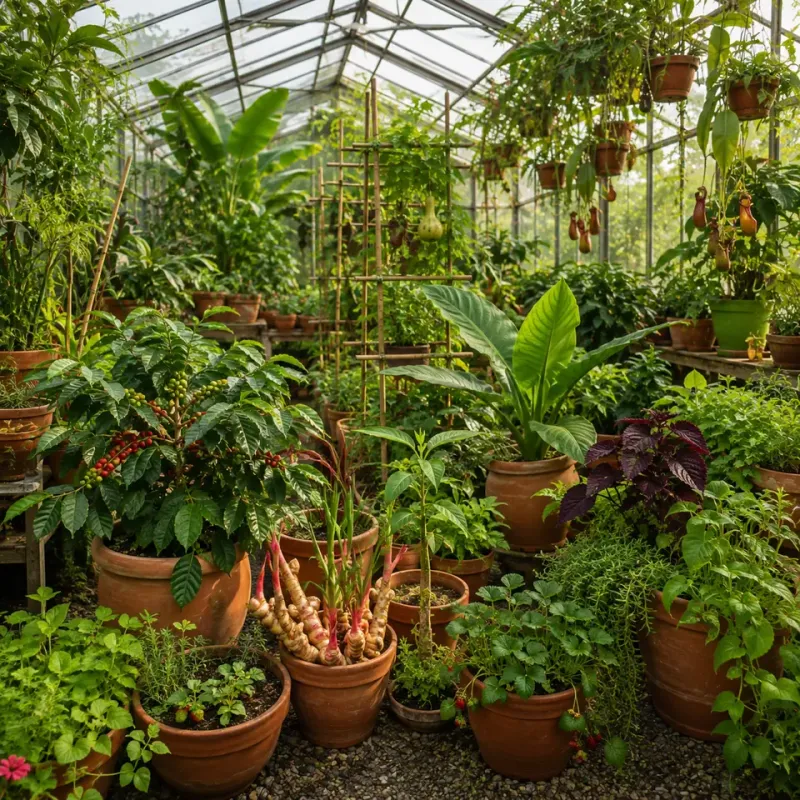
Sunlit greenhouse aisle filled with ginger, coffee, and tropical food crops
Household food infrastructure first

Operating doctrine

Food security first, sales second

The greenhouse is evaluated as homestead infrastructure before it is evaluated as a business line. Its first returns are groceries not purchased, nutrition, season extension, preserved food, propagation capacity and practical knowledge of the property.

A crop becomes available for commercial sale only after expected fresh consumption, preservation and winter-storage targets, seed or propagation stock and a reasonable loss reserve are satisfied. Only actual arm's-length sales belong in corporate revenue.

01

Household staples first

Crop choices begin with consumption, nutrition, quality and preservation value.

02

Small repeatable crop families

Constrained diversity simplifies seeding, irrigation, trellising, scouting and harvest.

03

Experiments stay separate

Specialty or high-energy trials use distinct beds and records with no base-case revenue.

04

Surplus is an outcome

Sales happen only after food, storage, propagation and resilience targets are physically reserved.

Primary returnFood not purchased, stored nutrition and site knowledge
Starting systemRepairable tunnel or hoop structure with manual fallback
Sales ruleOnly genuine surplus after household allocation

Crop system

Priorities for one person and one household

The highest market-price crop is not automatically the best protected-space crop.

PriorityCrop roleExamplesSurplus posture
1 · Household staplesHigh-consumption produce with a strong quality benefitTomatoes, peppers, cucumbers, greens and herbsModerate; only after preservation target
2 · Season extensionEarly, late and winter harvestSpinach, kale, lettuce, Asian greens and herbsSmall but potentially frequent
3 · PropagationStarts for outdoor beds and orchard understoryVegetable transplants, herbs and perennial startsLive plants are a separate taxable product class
4 · Storage and preservationCrops suitable for canning, drying, freezing or fermentingTomatoes, peppers and herbsOnly after processing capacity is reserved
5 · ExperimentalHigher-energy or climate-sensitive researchSpecialty varieties and contained growing trialsResearch scale; no base-case revenue

Operating method

Subsistence-first harvest allocation

A sales target never overrides fresh food, winter stores, propagation stock or a reasonable loss reserve.

  1. 01

    Measure harvest

    Record crop, grade, timing and expected storage life.

  2. 02

    Allocate household use

    Reserve fresh consumption, preservation targets and winter stores.

  3. 03

    Reserve resilience

    Set aside seed, propagation stock, loss allowance, gifts and barter.

  4. 04

    Apply surplus gate

    Only the quantity remaining after those commitments is available for sale.

  5. 05

    Use simple channels

    Prefer pre-order pickup or controlled local sale with minimal packaging.

Physical system and capital

Small, modular, repairable and manually recoverable

The first structure follows at least one season of site observation and shares water, access and monitoring plans with the wider homestead.

01Need proven

Paid work, recurring own-use need or a measured bottleneck.

02Inspectable

Condition, service history, consumables, manuals and support can be checked.

03Price disciplined

All-in used cost remains meaningfully below a supportable new equivalent.

04Payback bounded

Base-case payback fits within 24 months or the asset waits.

SystemUsed or DIY strategyPlanning rangeBusiness trigger
StructureUsed hoops, locally fabricated frame and verifiable surplus film$400-$1.2kProperty and site observation complete
IrrigationCommon fittings, drip lines, filters, valves and manual bypass$250-$700Water source and crop layout known
Environmental sensingExisting homestead network, durable sensors and alerting$150-$500After the shell is stable
Growing and trellisReusable beds, benches, containers and trellis$300-$900Crop plan validated
Harvest and storageWashable totes, scale, labels, shelving and cold-storage allocation$250-$700Recurring surplus sales
ContingencyFilm repair, pest exclusion, pumps and crop-loss reserve$200-$500Held as cash and parts

Operating controls

One-person growing and sales controls

The base case avoids permanently heated commercial production, complex life-support automation and volume promises.

01

Observe the site first

Sun, wind, snow drifting, drainage and frost are watched before the protected area is fixed.

02

Manual fallback

Hose, hand valve, roll-up vent and crop cover remain usable if sensors, actuators or power fail.

03

Household allocation records

Harvest weight, fresh use, preserved inventory, seed and loss reserve are documented before sales.

04

Simple local channels

Pre-order pickup and capped neighbour baskets fit the workload better than guaranteed volume.

05

No assumed tax benefit

Farm-property treatment requires real eligibility and does not extend to general welding or 3D areas.

06

Seasonal capacity

Peak watering, harvest and preservation orders are capped when trade work or orchard labour also peaks.

Evidence before expansion

Reliability, surplus and farm-program readiness

The greenhouse can be useful without becoming a large commercial operation.

  1. H1

    Household reliability

    Two seasons meet defined household fresh and preservation targets.

  2. H2

    Surplus validation

    At least ten documented surplus transactions occur without reducing household allocation.

  3. H3

    Accounting separation

    Crop, sale and expense records are reviewed; personal-use treatment is documented.

  4. H4

    Farm tax review

    Farmland assessment, FBR or exemption eligibility and ownership structure are reviewed before application.

  5. H5

    Market expansion

    Recurring surplus, low spoilage and customer demand justify only modest additional protected area.